
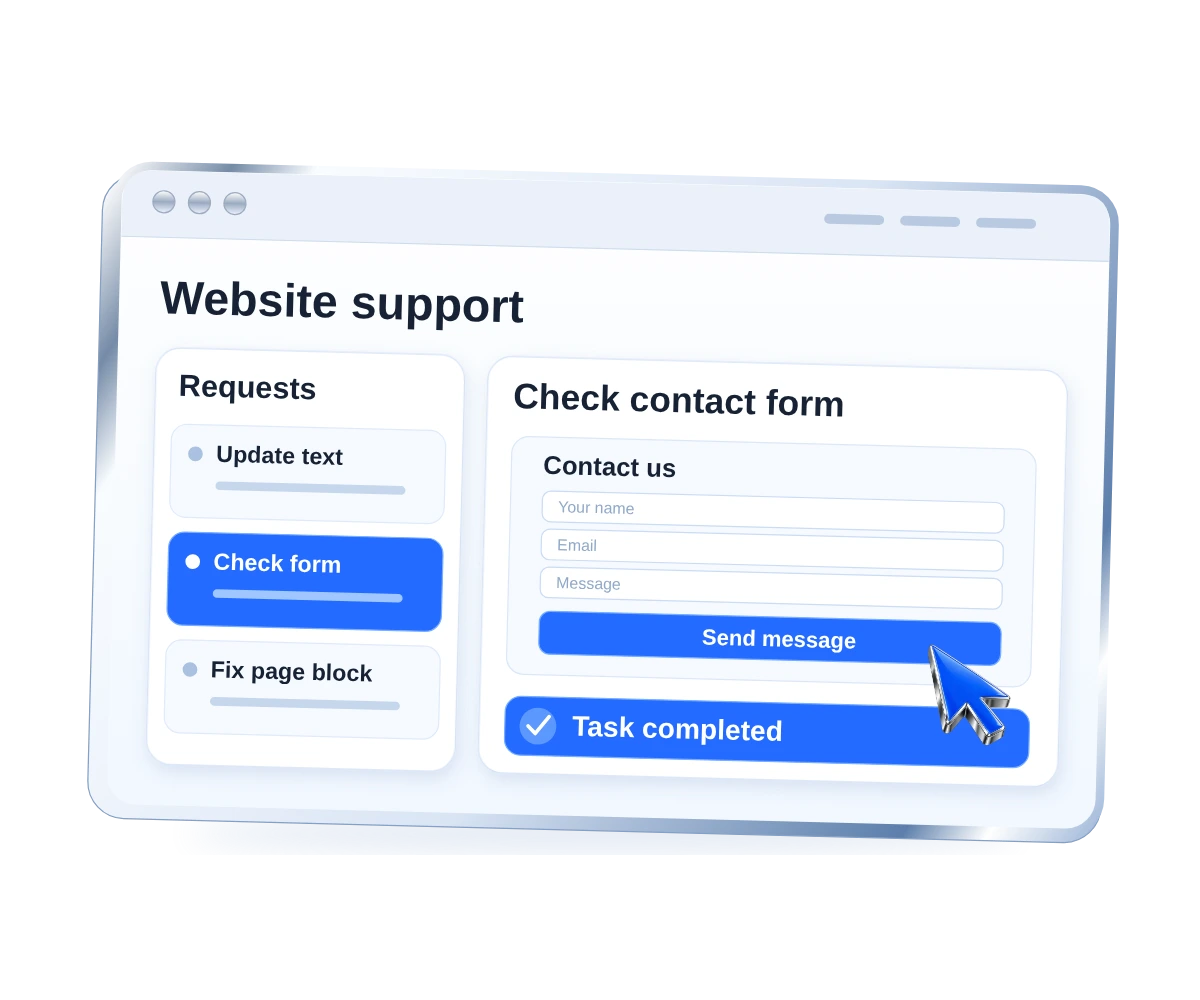
A website does not stop changing after launch. Browsers, CMS modules, advertising tools, business information and security expectations evolve. Website maintenance is therefore more than emergency troubleshooting after a server error.
Routine checks and safe updates
A practical plan covers uptime, error logs, forms, SSL expiry, backups and appropriate updates. The aim is to detect issues before customers report them. CMS or plugin updates should be followed by checks of critical journeys, especially payment and enquiry flows.
An automatic update is not a substitute for testing. A shop that loads but no longer accepts orders is not in a healthy state.
Separate support from new development
Support maintains agreed functionality. A new integration, advanced product filter, account area or complete design change is a development project. Put this distinction in the agreement so there are no surprises over scope.
Minor content edits and bug fixes can fit an agreed allowance of support hours. That makes priorities and costs easier to manage.
Choose a suitable commercial model
Retainers, work-on-request and hybrid plans all have a place. A simple corporate website may need modest coverage; a store processing daily orders requires firmer response procedures. Define who can authorize work, how emergencies are escalated and what happens outside business hours.
A clear website maintenance service is more useful than a vague promise to be “always available”.
Monitor business-critical outcomes
Beyond uptime, monitor successful enquiries, errors on important pages, working backups and performance. A periodic technical audit can reveal accumulated problems that everyday browsing misses.
Agreement checklist: coverage, response times, request process, access ownership, tested backups, change approvals and a clean handover procedure.