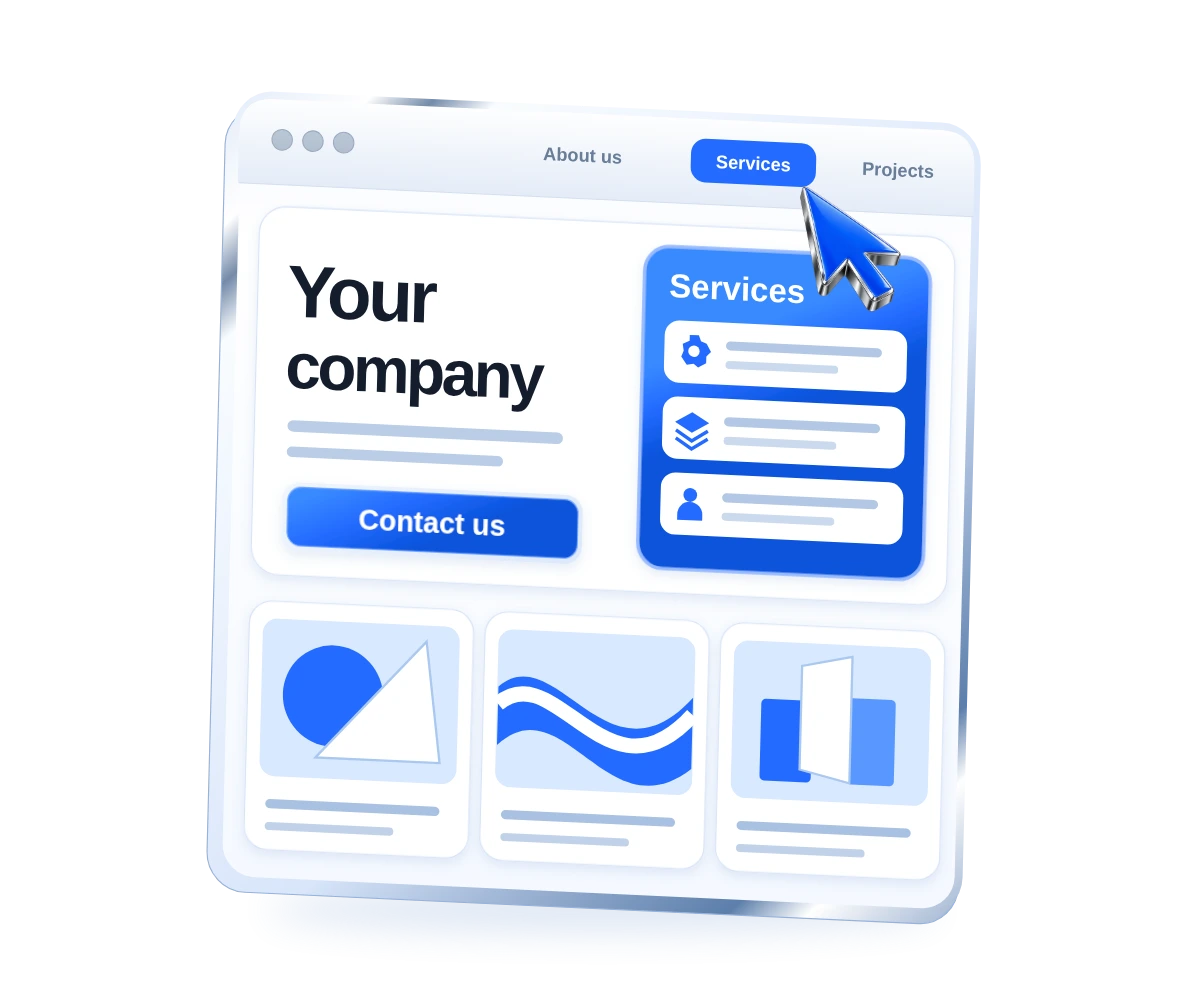
An attractive layout cannot repair a site where visitors fail to understand what the company offers or how to get in touch. Start a corporate website project with an information architecture: a page map, user journeys and the questions real buyers need answered.
Separate audiences by their goals
A procurement manager, a job candidate and an existing customer have different needs. One wants technical documents, another needs company information, and the third is looking for support. List primary visitor groups and the tasks each group should complete without having to phone the office.
Avoid one giant page for every service
Distinct business services deserve separate pages when they answer different questions or search intents. This helps visitors find the right offer and helps search engines understand page relevance. Do not, however, generate near-identical pages solely for keyword variations: each page needs substance and a reason to exist.
Design the next action
Every key page should suggest a relevant next step: request a quote, download specifications or speak to a specialist. Forms and contact details should not be buried in a footer. For longer B2B purchasing cycles, add intermediary conversions and decide who will respond to each request.
Validate navigation before development
Sketch a simple menu and give it to someone unfamiliar with the project. Ask them to locate a service, a case study, contact details and evidence of expertise. If these tasks are difficult on paper, animations and polished visuals will not make them intuitive on screen.
A short checklist
- List key audiences and their tasks
- Give distinct services meaningful landing pages
- Define the next action for every important page
- Test the menu using a low-fidelity prototype
A clear structure cuts rework and gives design, SEO and commercial requirements a coherent foundation.
Explore our approach to IQ Digital Agency services.