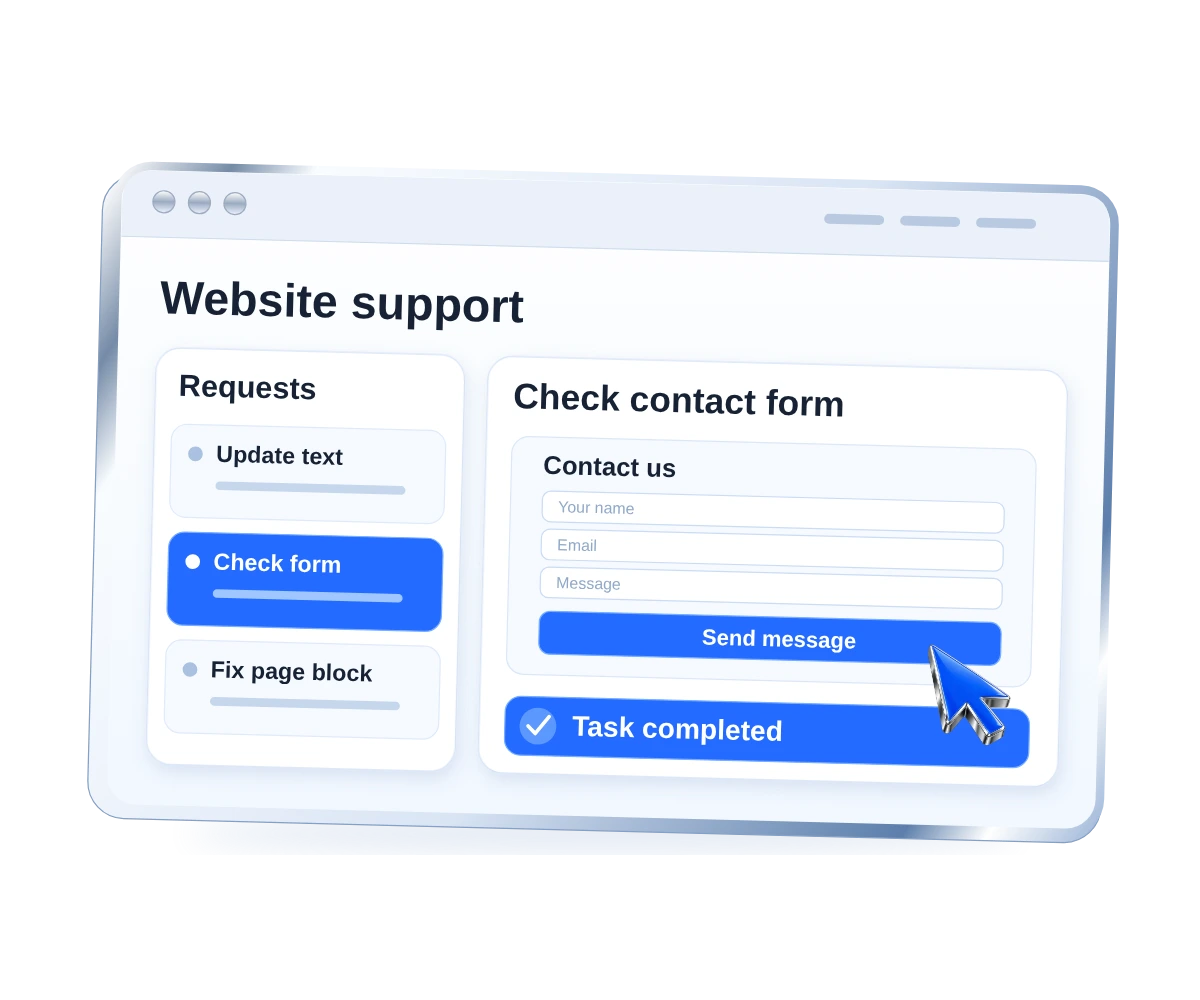
A new form, catalogue module or redesign may affect more pages than expected. Problems become costly when changes go directly to production without tests. A safer release is a planned sequence of checks with a realistic recovery path.
Separate development from production
Test updates in staging, ideally with a setup close to production. Use test accounts or anonymised data rather than copying personal information unnecessarily. Before release, list affected pages, assets, integrations and dependencies so that no component is silently omitted.
Build a practical checklist
Test navigation, forms, mobile menus, payments, catalogues and integrations. For SEO, review canonical URLs, redirects, titles, robots rules and the sitemap. If the website uses client-side navigation, test those transitions as carefully as direct page loads.
Prepare recovery before deployment
Create a backup and verify that it can actually be restored. Record the software version, deployment time and responsible person. A rollback plan should explain which files and database changes can be reversed safely instead of assuming every problem can be fixed by extracting an old archive.
Monitor after publication
Repeat critical journeys once the update is live. Check browser errors, server logs and incoming enquiries. Where URLs have changed, monitor 404 errors and search indexing reports. Test on both mobile and desktop rather than relying on the developer’s machine alone.
A short checklist
- List changes and test them in staging
- Review navigation, forms, SEO and integrations
- Verify backups and rollback steps
- Test the live site after deployment
Predictable releases reduce the cost of technical changes. The most expensive failure is often the one your customer notices before your team does.
Explore our approach to IQ Digital Agency services.